Posts

The PCN catheter from Manish Medi Innovation

  Accepting typical embryologic turn of events, the human kidney ordinarily is situated between the T12 and L3 vertebrae (right for the most part marginally lower than left). It typically is calculated with its boss shaft increasingly dorsal and average while its lower post is progressively ventral and horizontal. The kidneys have their sagittal plane (through the hilum) coordinated toward the body's sagittal plane. As it were, the kidneys are inclined in reverse 30 to 50 degrees from the body's coronal plane and inclined internally 30 to 50 degrees from the sagittal plane. The correct kidney is commonly a couple of centimeters lower or second rate compared to one side kidney. At the point when a patient is inclined, the two kidneys will in general move marginally superiorly. PCN arrangement can harm a few encompassing organs and structures including the pleura, stomach, colon, spleen and liver. Of these, wounds to the pleura and stomach are the most well-known. The ple...

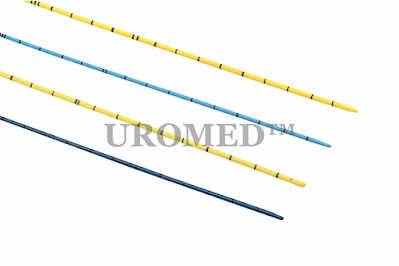
Sclerotherapy Needle and IP Needle from Manish Medi Innovation

Sclerotherapy viably treats varicose and bug veins. It's regularly viewed as the treatment of decision for little varicose veins. Sclerotherapy includes infusing an answer straightforwardly into the vein. The sclerotherapy arrangement makes the vein scar, compelling blood to reroute through more beneficial veins. The crumbled vein is reabsorbed into neighbourhood tissue and in the long run, blurs. After sclerotherapy, rewarded veins will in general blur inside half a month, albeit once in a while it might take a month or more to see the full outcomes. On certain occasions, a few sclerotherapy medicines might be required. Side effects are less normal yet may require treatment. These include: Irritation is typically gentle yet may cause expansion, warmth and uneasiness around the infusion site. Your PCP may propose an over-the-counter agony reliever, for example, anti-inflammatory medicine or ibuprofen (Advil, Motrin IB, others) to decrease the irritation. A chunk of thicke...

Urinary Catheters and Urology Stents by Manish Medi

Urinary catheters A urinary catheter is a tube put in the body to empty and gather urine out of the bladder. Urinary catheters are utilized to deplete the bladder. Your doctor may suggest that you utilize a catheter from legitimate Catheter manufacturers on the off chance that you have: ·          Urinary incontinence (spilling urine or being not able to control when your urine) ·          Urinary maintenance (being not able to discharge your bladder when you have to) ·          Surgery on the prostate or privates ·          Other ailments, for example, different sclerosis, spinal rope injury, or dementia Catheters come in numerous sizes, materials (latex, silicone, Teflon), and types (straight or coude tip). Ensure you get it from one of the qualities guaranteed Catheters suppliers . A Foley catheter is a typic...

Stents- Manishmedi

Image
Kidney stones are one of the reasons or conditions when urology stents manufacturers the medical profession consider using a stent, its main purpose; to drain urine from the body. A stent; ureteral stent manufacturers tell us is a hollow, flexible, latex tube used to drain urine from the kidney to the bladder.   The implanting of a stent is necessary in the event there is a blockage in the ureter. In order to ease this blockage the stent is placed to connect the kidney with the bladder subcutaneously.   urology catheters manufacturers The small (24 to 30 cm) long tube when placed inside the ureter subcutaneously will serve the purpose of draining urine and relieving the pressure within. The “double J” stent, so named because of the curl at both ends is curled to hold it in place. The advantage of the curls is to hold both ends in the right place one end in the bladder and the other in the kidney. This process is common place when there is a blockage in the ureter ...

Catheter manufacturers

Image
The PCN catheter was originally described by urologist Dr Willard Goodwin in 1955 as a minimally invasive, x-ray guided temporary or permanent procedural alternative to traditional surgery in patients with hydronephrosis. Catheter manufacturers using clinical data find four broad indications for a PCN placement, which are; first for the relieving of urinary obstruction, second, diagnostic testing, third for access, for therapeutic interventions, and fourth urinary diversion. PCN catheter Relief from urinary obstruction is the most common cause for PCN catheter placement representing 85 to 90% of recipients. The top three causes of renal obstruction in adults are iatrogenic benign stricture, urinary stones, and malignancy. From imaging, diagnoses can be made with computed tomography (CT), ultrasound, magnetic resonance imaging (MRI), or nuclear medicine of renal obstruction. Ultrasound is usually option one due to high sensitivity for detecting a dilated collecting system...

Urology and catheters manufacturers

Image
If one has the need for a urinary catheter, there are a few different types to be in the know of. The doctor will work with one to find the type of catheter that works for that specific condition and comfort levels, but if your doctor approves, you can test a few to ensure you find the best fit. Catheter manufacturers typically, manufacture catheters from silicone, latex, or a combination of the two If one needs to wear a catheter for a short duration of time like after surgery, the doctor will recommend an intermittent catheter. The intermittent catheter is used for many ambulatory or interned, bedridden patients. The catheter is linked to a drainage bag that can later be emptied into the toilet. The use of an intermittent catheter implies that you will need to insert and remove the catheter every time to be relieved throughout the day. Fortunately, the use of an intermittent catheter is effective, easy, and safe and this is “routine”, coming from urology catheters manufacturers...

Ureteral stents- Manishmedi

Highly sophisticated urology stents manufacturers recommend a ureteral stent in the intervention of kidney stone treatment. This is a soft tube structurally about 10 - 12 inches long and about as thick around as a pen refill. It is placed in the ureter, which is a muscular tube which drains urine from the kidney to the bladder.   One end of the tube stays inside the kidney, and one end placed in the bladder. The function of a stent is to hold the ureter open and facilitate drainage of urine. Designed and developed to perfection ureteral stent manufacturers manishmedi recommend medical professionals with a few guidelines. It is usually a temporary arrangement, although in some cases a stricture of the ureter is managed long-term with a stent. A stent is placed if the urologist thinks that urine might not drain well from the ureter. This may be caused by a stricture or as a reaction to surgery.   Although uncommon, if you notice that the stent slips out, please inform the m...